Why Ephemera Demands Museum Grade Stewardship
Music paper ephemera begins life with a deliberately short horizon. A gig poster is designed to fill a wall for a few weeks, a test press insert may exist only to identify a small run, and liner art is often handled, folded, mailed, and filed with little thought for its survival. Yet these objects can become the clearest surviving evidence of an artist”s early identity, a label”s visual language, or a scene that was never comprehensively documented. For independent labels and collectors, the paper surrounding a release is not disposable packaging. It is part of the cultural record.
That distinction matters because active restoration and preventive conservation pursue different goals. Restoration changes an object to recover legibility, stability, or appearance. Preventive conservation changes the conditions around it so deterioration slows without altering original material. The second approach is usually the safest starting point for posters, sleeves, inserts, contact sheets, and other mixed-media artifacts. It prioritizes darkness, stable humidity, clean enclosures, careful handling, and documentation before cosmetic intervention.
The major threats are environmental chemistry and mechanical stress. Light drives irreversible photochemical reactions, moisture enables hydrolysis and biological growth, oxygen and pollutants accelerate oxidation, and repeated humidity changes make fibres expand and contract. Independent archivists, record labels, studios, and private collectors therefore hold an important role. With disciplined storage rather than expensive treatment, they can preserve modern music history in a form that remains authentic, legible, and useful to future researchers.
Cellulose and Chemistry Inside the Paper Matrix
Paper is not a single material category. Historic rag papers made from cotton or linen fibres often contain long, relatively strong cellulose chains and may remain flexible for generations when stored well. Much twentieth-century commercial print stock, by contrast, relies on wood pulp. Residual lignin, acidic sizing, bleaching by-products, inks, coatings, and manufacturing contaminants can all reduce stability. The phrase “archival quality” is not enough to identify the difference. Fibre source, pH, lignin content, additives, and enclosure chemistry need to be considered together.
Acid hydrolysis breaks the chemical bonds that join cellulose molecules. Water vapour participates in this reaction, even at modest humidity, although lower and more stable humidity slows it considerably. Acids generated inside wood-pulp paper can migrate through a print run, transferring deterioration from one sheet to another when papers are stacked in close contact. Oxidation creates additional weakness and discoloration. Light can split cellulose chains and alter colour-forming molecular groups, known as chromophores. The result is familiar to anyone who has opened an old box of flyers: yellowing, brittleness, edge loss, and paper that cracks instead of flexing.
Diagnosis should remain conservative. A yellow margin does not automatically mean that treatment is required, and a clean-looking sheet may already have lost substantial strength. The practical task is to connect visible symptoms with likely risks, then reduce those risks before attempting repair.
| Physical symptom | Likely degradation pathway | Preventive response |
|---|---|---|
| Yellowing or brown margins | Acid hydrolysis, oxidation, or lignin-related discoloration | Cool, stable storage and alkaline-compatible housing where appropriate |
| Cracking during gentle movement | Loss of cellulose chain length and fibre embrittlement | Handle less, provide rigid support, avoid rolling and pressure |
| Faded or shifted colours | Photo-oxidation and dye instability | Reduce light exposure and display duration |
| Surface powder or image loss | Friable media, abrasion, or binder failure | Use non-contact protection and avoid plastic sleeves that create rubbing |
Institutional guidance on material degradation challenges reinforces why printing processes and material composition must be treated as preservation variables, not merely production details. For a label archive, recording the paper type, printing method, date, and known storage history can be as valuable as photographing the front of the object.
The Invisible Spectrum of Photochemical Decay
Ultraviolet radiation is highly energetic and can trigger rapid fading, embrittlement, and chemical change. Removing UV is therefore essential, but it does not make display harmless. Visible light also accumulates damage, and exposure is best understood through illuminance and time, often expressed as lux hours. A brightly lit poster in a shop window may receive in days what a dimly displayed object would receive over months. Damage is cumulative and permanent, particularly for fugitive dyes and fluorescent colours.
Modern music graphics can be unusually vulnerable. Screenprint inks may contain pigments with different levels of lightfastness, lithographic layers can fade unevenly, and fluorescent offset dyes often lose intensity quickly. Photographic inserts and inkjet prints introduce their own sensitivities. A conservator or qualified lighting specialist should assess important works, but a small archive can make strong progress by reducing exposure, using copies for public display, and monitoring conditions rather than relying on visual brightness alone.
- Keep original paper away from direct sunlight, skylights, and unfiltered display lighting.
- Use UV-filtering glazing or museum acrylic, while remembering that visible light still causes damage.
- Choose indirect LED illumination with controllable output and avoid heat-producing fixtures close to the object.
- Measure light at the artwork plane rather than estimating brightness from the room.
- Rotate displays, record exposure dates, and use high-quality facsimiles for long-running exhibitions.
- Store flat files and boxes closed, dark, clean, and away from windows or exterior walls with condensation risk.
Lighting policy should reflect significance and vulnerability. A rare hand-pulled poster with fugitive ink deserves a shorter display period than a modern, demonstrably lightfast reproduction. The goal is not to eliminate access. It is to separate access from unnecessary exposure, protecting the original while allowing the image and story to circulate through scans, photography, and controlled display.
Managing Relative Humidity Swings and Microclimates
Paper is hygroscopic, meaning it exchanges moisture with surrounding air until it approaches equilibrium. As its moisture content changes, fibres expand and contract. A single sheet may curl or cockle, while a mounted sheet can develop tension between paper, adhesive, board, and glazing. Repeated movement can produce tears, planar distortion, delamination, and fatigue cracking even when no single humidity event seems dramatic.
High humidity introduces additional risks. Damp conditions above 75 percent relative humidity are particularly dangerous because they support mould, accelerate corrosion, and can cause severe mechanical damage. Mould risk can begin well below that level when warmth, poor air circulation, dust, and nutrient-rich materials combine. The commonly cited 65 percent threshold is therefore a warning point, not a universal guarantee of safety. The Canadian Conservation Institute emphasizes that the correct range depends on the collection and that fluctuations can be as damaging as sustained extremes.
There is no single perfect setting for every mixed archive. Paper, photographic materials, adhesives, plastics, and magnetic media may require different compromises. A generally cool, clean, and stable environment is more valuable than chasing an exact number that the building cannot maintain. Data loggers should be placed where objects actually reside, including inside cabinets or boxes, because room readings may not represent the microclimate around a stored poster.
Microclimates can provide practical protection. A well-fitted frame, sealed box, or solander-style enclosure reduces rapid exchange with room air. Condition-responsive sorbents, including properly prepared silica gel systems, can buffer moisture when sized for the enclosure and monitored over time. Do not seal damp or mouldy material. Enclosures should be clean, breathable where necessary, and inspected for condensation, odour, pest activity, and distortion.
- Track temperature and relative humidity continuously where valuable material is stored.
- Avoid rapid heating and cooling, which can cause abrupt humidity changes at the object surface.
- Keep collections off floors and away from plumbing, exterior masonry, vents, and uninsulated roofs.
- Quarantine new acquisitions when mould, insects, or dampness is suspected.
- Use separate environmental zones for particularly sensitive photographs, unstable plastics, or wet materials.
- Never use a sealed microclimate to hide an unresolved moisture problem.
Enclosure Physics and Material Selection Standards
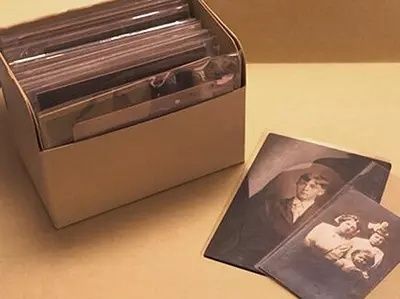
An enclosure is an active preservation tool. It limits handling, filters dust, reduces light, cushions mechanical shock, and can moderate short-term humidity change. The term “acid-free” alone does not establish quality. Paper and board should generally be low in lignin, chemically stable, and within an appropriate pH range, often approximately 7 to 8.5 for ordinary paper storage. Alkaline buffering with calcium carbonate can neutralize acids entering or forming within many paper objects, but it is not universally appropriate.
Buffered board is often useful for acidic wood-pulp papers and many ordinary prints. Neutral, unbuffered rag materials may be safer for objects containing alkaline-sensitive dyes, certain photographic processes, or media whose colourants may react with an alkaline reserve. Photographic materials require particular care: materials in direct contact should pass the Photographic Activity Test, or PAT, under ISO 18916. Polyester film such as Melinex, untreated polypropylene, and polyethylene are generally preferred plastics. PVC and plasticized vinyl can release harmful compounds and should not be used for long-term housing.
| Approach | Typical risk | Museum-standard improvement |
|---|---|---|
| Retail frame with ordinary backing | Acid migration, wood off-gassing, pressure, and poor reversibility | Use lignin-free board, archival window mat, stable glazing, and spaced mounting |
| Self-adhesive mounting corners or tape | Adhesive staining, embrittlement, and difficult removal | Use reversible paper hinges or archival corners selected for the object |
| PVC sleeve | Plasticizer migration and off-gassing | Choose stable polyester, polypropylene, or polyethylene after testing suitability |
| Buffered folder for every item | Possible interaction with alkaline-sensitive media | Match buffered or unbuffered housing to the object and media |
For practical reference, the Library of Congress provides frequently asked questions on paper housing, including warnings about self-stick tapes, permanent display, and do-it-yourself repairs. A retail frame can be made safer, but it should not be assumed safe simply because a package uses the word archival. Ask suppliers for technical specifications, PAT results where relevant, pH information, lignin content, and adhesive composition.
Handling Protocols and Non-Invasive Stabilization
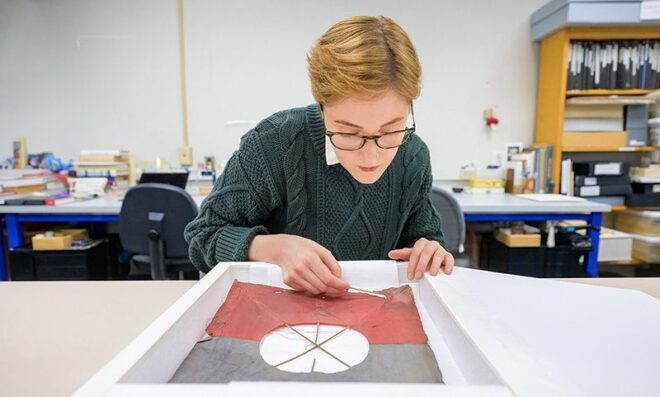
Clean, dry hands often provide better tactile sensitivity than gloves, especially when turning thin paper or sensing a sheet”s resistance. They also avoid the snagging risk of loose textile gloves. Gloves become useful when surface oils, photographic emulsions, metal components, or contamination make direct contact inappropriate. Nitrile gloves are usually preferable to powdered gloves, but they should be changed when dirty and should never substitute for support. The most important rule is simple: handle as little as possible, and support the whole object.
Oversized gig sheets should move on a rigid, clean support board rather than by gripping corners. Brittle folded jackets should not be forced flat. Architectural folds, pasted layers, and friable screenprint surfaces need a separate assessment before opening. Reversible wheat starch paste and Japanese paper hinges can support appropriate objects, but even traditional techniques require training and documentation. Self-adhesive tape, including products marketed as archival, introduces future removal problems and should be avoided.
- Prepare a clean workspace with adequate room, stable lighting, and no food, drink, loose pens, or clutter.
- Wash and dry hands, or select clean nitrile gloves when the media or surface requires them.
- Photograph the object before moving it, including folds, tears, labels, inscriptions, and existing attachments.
- Lift with both hands or slide the sheet onto a rigid support; never pull from a corner or edge.
- Inspect without forcing folds, removing stuck inserts, flattening curls, or testing fragile media.
- Record dimensions, creator, date, release or event context, condition, housing, and any known provenance.
- Place the object in a suitable folder, sleeve, or box, then label the enclosure rather than writing on the artifact.
Cataloging is part of conservation because it reduces future handling and preserves context. A high-resolution reference image, structured metadata, and a condition note allow staff, artists, and researchers to work from a surrogate when the original should remain protected. When damage is active, extensive, valuable, or chemically complex, consultation with a paper conservator is the responsible next step. Nonintervention is not neglect when the object is stable and the decision is documented.
Build Your Living Archive with Enduring Principles
The strongest preservation gains are often inexpensive. Keep originals dark, cool, clean, and supported. Stabilize humidity rather than chasing perfection. Replace PVC and unknown adhesives with tested materials. Reduce handling through digital surrogates, clear cataloging, and controlled access. These measures address the main deterioration pathways without changing the visual evidence that makes a poster, insert, or sleeve culturally meaningful.
Preventive conservation also protects creative control across generations. Independent labels and artists may not have institutional budgets, but they can adopt institutional habits: document decisions, choose reversible methods, separate display from storage, and treat environmental stability as part of catalog management. A fragile piece of music ephemera does not need aggressive cosmetic intervention to earn a future. It needs informed stewardship, consistent monitoring, and a preservation plan that respects both the material and the scene it represents.