The Living Surface of Heat and Wax
Encaustic painting occupies a rare position between painting, sculpture, and material chemistry. Its optical character comes from translucent layers of wax in which light enters, encounters pigment at different depths, and returns with a soft internal radiance. The surface can be polished to a subdued glow, left matte and absorbent, or repeatedly fused until marks appear to settle beneath a clear skin. Synthetic acrylic and alkyd systems can imitate some of these effects, but they rarely reproduce the same combination of depth, warmth, tactile resistance, and physical responsiveness to heat.
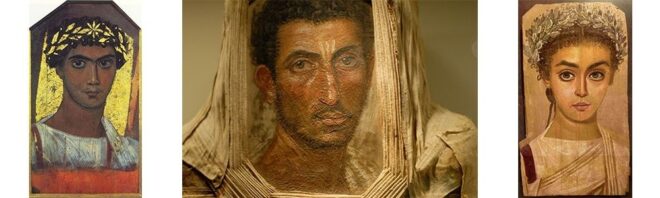
The medium”s historical record gives its claims to durability unusual weight. Egyptian funerary portraits made with encaustic materials have survived for roughly two millennia, retaining individualized faces, modeled shadows, and traces of color. Artists tracing the medium back to antiquity can explore how master artisans created lifelike images in encaustic painting techniques that remain visually compelling thousands of years later, while an Authoritative Source can help ground modern experiments in the surviving material record. Contemporary studios are returning to this organic thermal chemistry not simply for historical romance, but because wax permits a distinctive working rhythm: add, soften, fuse, scrape, bury, reveal, and polish.
Luminescence Across Millennia from Fayum to the Modern Easel
The best-known ancient examples emerged in Greco-Roman Egypt, especially the Faiyum region, during the first through third centuries CE. These funerary portraits were attached to mummies and made on wooden panels, linen, or cartonnage. Some used tempera, while others used encaustic, in which heated beeswax bound finely ground pigments. Their cultural identity was equally layered. Egyptian burial practices and ideas of preservation met Greco-Roman portrait conventions, producing images with individualized features, modeled flesh, elaborate hairstyles, jewelry, gilding, and enlarged eyes.
Wax contributed to the remarkable survival of these objects because it forms a relatively continuous, water-resistant matrix around pigment. That barrier is not an absolute guarantee against damage. Wood can split, heat can soften wax, handling can abrade a surface, and inappropriate conservation treatments can alter the appearance. Nevertheless, beeswax does not yellow as readily as many historic drying oils, and its low water affinity helps limit some forms of moisture penetration. Surviving artifacts such as Romano-Egyptian mummy portraits in museum collections provide a powerful record of this resilience; the Getty”s Fayum portrait collection object offers a particularly useful point of comparison for artists studying ancient surface and color.
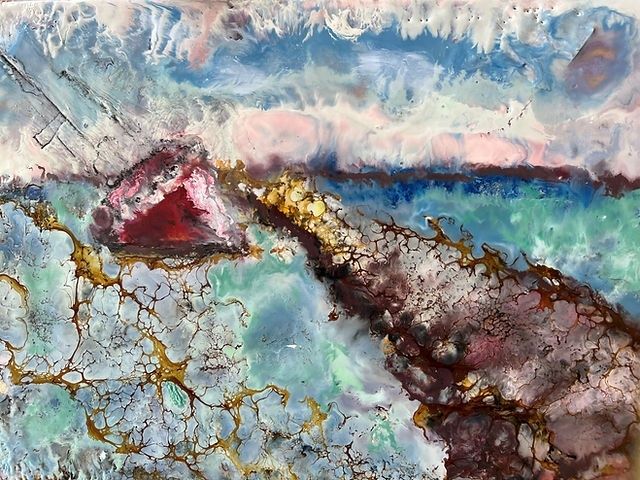
Ancient makers did not work with today”s electric palettes, temperature-controlled tools, or standardized pigment sticks, yet their central logic remains current. A layer had to become sufficiently fluid to bond with the layer beneath it, and the surface had to be managed before it cooled into a fixed state. Modern practitioners translate that discipline into a repeatable workflow: keep the medium warm but not overheated, apply controlled amounts, fuse without scorching, and allow the support to remain stable. Contemporary wax exhibitions continue to demonstrate how this old process supports abstraction, landscape, sculpture, and conceptual work, rather than confining artists to historical reconstruction.
The Chemistry of Encaustic Medium and the Role of Damar
A standard encaustic medium combines beeswax with damar resin crystals, a natural resin derived from Shorea species. Beeswax supplies translucency, adhesion, body, and a forgiving working surface. Damar changes the balance. It increases hardness, raises the softening and melting range, contributes clarity and gloss, and gives the cooled film greater resistance to deformation in ordinary studio conditions. Pure beeswax can remain too soft for heavily layered work, and some surfaces may develop a pale bloom or hazy appearance as wax components migrate and crystallize.
The ratio is not a universal law. It is a design decision shaped by climate, support, application thickness, desired gloss, and whether the medium will carry embedded material. Cold wax is a different system altogether: it is generally beeswax combined with solvent and resin for use with oil paint, without the molten application and heat-fusion cycle of encaustic. The comparison below clarifies the practical distinctions.
| Material | Heat requirement | Typical behavior | Best suited to |
|---|---|---|---|
| Raw beeswax | Molten for application | Soft, translucent, relatively flexible | Simple medium, encaustic experiments, low-resin effects |
| Cold wax medium | No heat required | Paste-like, matte to satin, workable with oil color and dry materials | Layered oil painting and broad mark-making |
| Beeswax and damar encaustic | Molten application and fusion | Harder, clearer, more heat resistant, capable of polish | Archival panels, substantial layering, collage, and sculptural surfaces |
Formulating the Medium with Ratios and Preparation Steps
Many artists begin near an 8 to 1 beeswax-to-damar ratio by weight, which provides a relatively fluid, luminous medium with moderate hardness. A harder 6 to 1 formulation increases the resin content and can be useful where the studio is warm, the work will be built in thicker passages, or a more resistant surface is required. The broader practical range is often described as approximately 10 to 30 percent damar, with a middle-range formulation near 15 to 20 percent. Consistency matters more than allegiance to a single recipe, so every batch should be recorded by weight, temperature, and observed handling properties.
Use damar crystals rather than damar varnish. Varnish contains solvents and is not an interchangeable encaustic ingredient, particularly when heated. Damar crystals may contain bark fragments, insects, or other organic debris, making filtration an important part of preparation. A controlled process reduces contamination and protects color clarity.
- Weigh the beeswax and damar crystals separately, using a ratio suited to the intended hardness and studio climate.
- Melt the damar gently in a dedicated electric melting pot or palette. A working range around 245 degrees Fahrenheit may be used for dissolving resin, after which the temperature should be reduced before adding beeswax.
- Add the beeswax gradually and stir until the mixture is fully homogeneous. Avoid open flames, improvised cookware, and any vessel that may later be used for food.
- Strain the molten medium through a heat-resistant filter or fine metal screen into a clean pouring container. Handle the filter carefully because trapped debris and hot wax retain heat.
- Pour the filtered medium into silicone molds or shallow heat-safe forms. Once cooled, inspect the cakes, scrape away sediment if necessary, and remelt only when a second filtration is justified.
- Store the finished cakes cleanly and label the recipe, date, and ratio. Test a small panel before committing the batch to a major work.
Temperature control is a safety issue and a conservation issue. Excessive heat can discolor wax, degrade organic components, scorch supports, and generate unpleasant or hazardous fumes. The goal is to keep the medium just fluid enough to brush or pour. A thermometer designed for the studio setup is more reliable than judging heat by appearance alone, and a dedicated electrical palette offers better repeatability than a household hot plate.
Thermal Fusion and Layering Dynamics in Mixed-Media Studio Work
Fusion is the structural hinge of encaustic painting. Each new layer must be warmed sufficiently to bond with the layer beneath it; otherwise, the painting may behave like a stack of separate films and become vulnerable to delamination. Fusing also changes the visual character of the work. Heat can level brush ridges, open small bubbles, soften transitions, deepen translucency, and move pigment subtly through the softened wax. The most controlled results come from brief, observant passes rather than prolonged heating.
Different tools produce different thermal signatures. A heat gun distributes warm air across a broad area and is useful for gradual surface integration, although excessive airflow can push liquid wax or disturb collage. A torch delivers concentrated heat and can create rapid local fusion, but it demands strict control and a clear workspace. Heated irons and specialized tools create directional marks, compressed textures, and deliberate incisions. The choice should follow the intended surface language, not convenience alone.
- Heat gun: useful for broad, even fusion and gentle leveling, with care required around loose pigment and lightweight inclusions.
- Torch: effective for localized melting and dramatic surface effects, but unsuitable for casual use near flammable materials.
- Heated iron or stylus: valuable for drawing, imprinting, scraping, and controlled compression of the wax film.
- Electric palette: the central preparation surface for warming medium, pigment sticks, tools, and small quantities of color.
Encaustic”s structural versatility becomes especially clear in mixed-media work. Natural fibers, bark, vines, foliage, paper, fabric, powdered pigment, oil sticks, and found fragments can be embedded when their porosity, cleanliness, and heat tolerance are understood. Wax can stiffen and protect fibers, increase water resistance, and lock fragile materials into a coherent relief. Yet every inclusion changes the movement of heat through the piece. Thick or insulating materials may prevent proper bonding, while moisture trapped in porous matter can create later instability. Thin additions, tested supports, and staged fusion are therefore more reliable than ambitious embedding in a single pass.
Igniting Your Studio Practice with Thermal Wax
The strongest encaustic practice combines historical discipline with contemporary risk. Ancient portraits demonstrate what careful material decisions can preserve, while modern mixed-media studios show how far the medium can move beyond portraiture. Begin with a small rigid panel, a transparent medium, one or two pigments, and a limited set of tools. Test a soft 8 to 1 blend beside a harder 6 to 1 blend, then compare gloss, scraping response, adhesion, and behavior under gentle reheating.
A sustainable daily routine depends on treating heat as a controlled studio process rather than a decorative effect. Ventilation, temperature monitoring, clean tools, and dedicated equipment protect both the artist and the work. Keep combustible materials away from torches and hot palettes, use heat-resistant gloves where appropriate, and never substitute damar varnish for damar crystals.
- Set up cross-ventilation or suitable local exhaust before melting wax or resin.
- Use a dedicated electric palette and thermometer, positioned on a stable, nonflammable surface.
- Label every medium batch with its wax-to-resin ratio and preparation date.
- Test pigments, collage materials, and supports for heat tolerance before embedding them in a finished work.
- Fuse each layer deliberately, allowing the surface to cool before judging its final opacity and texture.
With those controls in place, encaustic becomes more than an atmospheric effect. It becomes a disciplined material language in which chemistry, temperature, light, and gesture remain visible in the finished object. The reward is the same quality that made the medium valuable across centuries: a surface that does not merely display color, but holds light inside its structure.