
The Myth of the Neutral White Cube
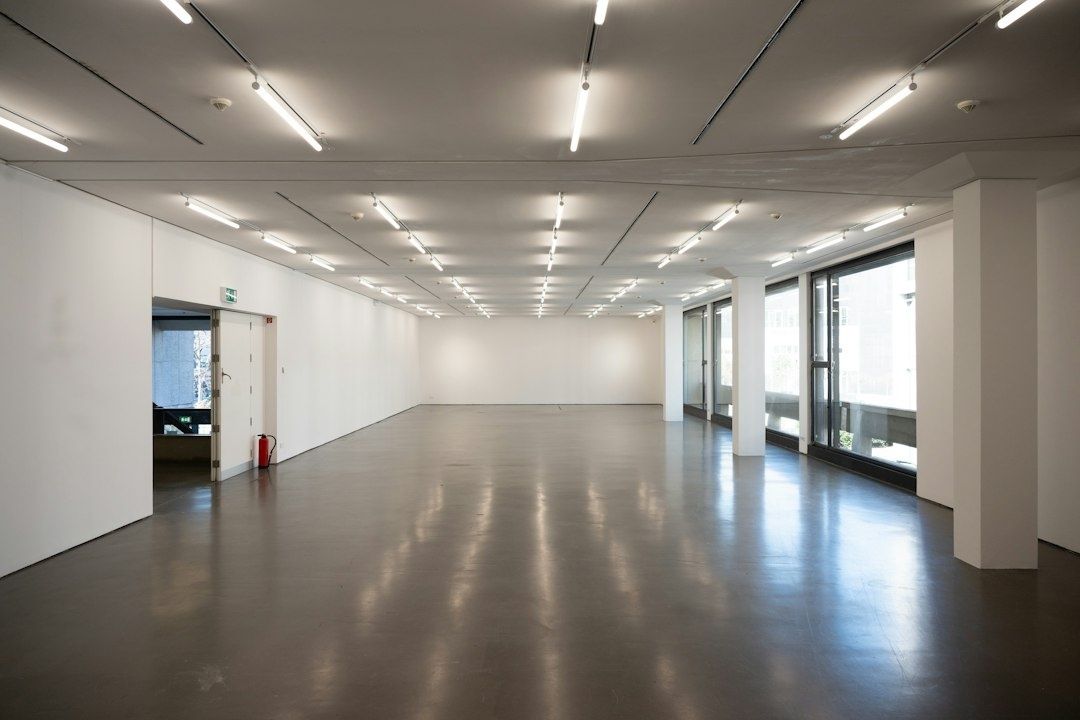
The white cube presents itself as an empty container, a clean room in which an artwork can supposedly speak without interference. That neutrality is a useful fiction. White walls, controlled lighting, disciplined sightlines, and carefully regulated silence do not remove context. They replace visible context with institutional context, making the gallery, museum, or commercial venue appear detached from the social forces that decide what enters the room, who is invited to see it, and how much attention it deserves.
For independent visual artists, sound artists, producers, labels, and grassroots curators, this matters because presentation is never separate from meaning. A rough recording staged in a basement, a projection mapped onto a warehouse wall, or a live set performed beside traffic carries different cultural information from the same work displayed in a pristine gallery. The conventional room often frames polish as seriousness and unpredictability as a problem. It can also make access feel conditional, requiring professional networks, institutional endorsement, and financial resources before an audience is even allowed to encounter the work. Reclaiming space therefore means reclaiming the conditions under which value is produced.
Architectural Framing and the Manufacture of Speculative Value
The gallery separates an object from ordinary use. A chair becomes sculpture when it is placed on a plinth, surrounded by empty space, and accompanied by a label. A field recording becomes an installation when it is routed through a carefully positioned speaker system and presented as a limited artistic proposition. This separation can create productive concentration, but it also manufactures distance. The viewer is encouraged to treat the work as rare, autonomous, and worthy of specialized interpretation rather than as part of a living social environment.
That distance becomes economically powerful when institutional recognition, scarcity, and market circulation reinforce one another. Contemporary art operates within a post-Fordist economy in which value is increasingly attached to intellectual property, reputation, flexibility, branding, and speculative potential. The artist is not only making an object or performance. The artist is also generating a narrative, a network, an archive, and a future market position. A gallery”s architecture helps stabilize that position by presenting work as coherent, collectible, and already validated.
Institutional authority assigns value through selection as much as through quality. A museum acquisition, a biennial invitation, a respected curator”s essay, or representation by an international gallery can alter how the same work is read. The growth of White Cube from a London gallery founded in 1993 into a network spanning Europe, Asia, and North America illustrates how exhibition infrastructure can become part of an artist”s global positioning. The pristine room is not merely a backdrop. It is an instrument in a system that converts cultural attention into financial and political power.
These dynamics are not only abstract concerns for independent scenes. Commercial systems reward work that can travel cleanly through fairs, press images, storage facilities, insurance policies, and secondary markets. Quiet rooms, neutral surfaces, and controlled conditions make objects easier to document, compare, price, and resell. The resulting aesthetic can appear universal while serving a specific economic logic. A useful structural critique is offered in Politics of Art: Contemporary Art and the Transition to Post-Democracy – Journal #21, which examines how contemporary art is embedded in neoliberal capital, institutional power, labor exploitation, and urban transformation.
The Acoustic Prison of the Sterilized Gallery
Sound exposes the limits of the white cube particularly quickly. Reflective drywall, hard floors, sealed windows, and carefully controlled silence create an acoustic regime in which every unintended noise becomes conspicuous. A cough, a ventilation system, a neighboring installation, or footsteps across the room can compete with the work. Yet the room often treats these sounds as contamination rather than material. Sonic experimentation is welcomed when it behaves like a contained object and treated as an intrusion when it reveals the architecture around it.
Independent acoustic environments operate differently. A warehouse introduces long reverb tails and low-frequency bloom. A basement may compress sound through concrete and pipes. A public thoroughfare adds engines, voices, weather, and unpredictable movement. These conditions can make listening less passive and more embodied. The audience does not simply receive a composed track; it hears the negotiation between the track and its environment. That negotiation can create tension, intimacy, or collective focus that a sterilized gallery is designed to minimize.
| Pristine institutional space | Independent acoustic environment |
|---|---|
| Silence is treated as a default | Ambient sound becomes part of the composition |
| Reverberation is controlled or concealed | Architectural resonance shapes the performance |
| Audience behavior is tightly regulated | Movement, conversation, and proximity remain flexible |
| Work is framed as a finished proposition | Work can remain responsive, unfinished, and site-specific |
This does not mean every rough site is automatically liberating. Poor monitoring, excessive volume, unsafe wiring, or unplanned noise can undermine the work and exhaust an audience. The strategic point is to treat acoustic conditions as creative parameters rather than obstacles to be hidden. Independent producers can use delay, speaker placement, directional sound, silence, and physical distance to make the site legible. The room should not disappear. It should enter the piece.
Recontextualizing Tradition and Reimagining Curatorial Encounters
Reclaiming space does not require rejecting history or formal technique. It requires changing who controls the frame. Contemporary practitioners regularly revive established forms by placing them in dialogue with sound, movement, public life, digital media, and community knowledge. The issue is not whether an artist uses ink, painting, sculpture, field recording, or archival material. The issue is whether the presentation locks that medium into inherited hierarchies or opens it to new relationships.
Dialogue-driven formats are especially effective because they challenge the passive gaze. A curator tour, listening session, open rehearsal, annotated performance, or site-specific installation can reveal how decisions were made and invite audiences into interpretation. The Curator Talk & Tour | Ink Shower offers a useful example of presentation built around conversation, connecting the history of ink wash painting with contemporary artists reimagining its traditions. Such formats do not reduce art to explanation. They show that interpretation is an active, shared practice.
For independent scenes, this approach can also redistribute authority. A label listening event might pair a new release with a conversation about sampling, local sound histories, or the material conditions of production. A visual exhibition might allow the artist, a neighborhood historian, and a performer to guide audiences through the same site from different perspectives. A curator can replace the conventional wall text with a map, a live score, an open archive, or a sequence of encounters. The result is a more complex form of attention, one in which the audience understands not only what the work is but how its context changes its meaning.
- Replace passive viewing with guided listening, discussion, or movement.
- Place traditional media alongside contemporary technologies and local knowledge.
- Let the site influence the sequence, duration, and interpretation of the work.
- Make production conditions visible without turning the event into a promotional pitch.
- Invite audiences to contribute observations, recordings, memories, or responses.
Tactical Blueprint for Reclaiming Independent Physical and Sonic Space
Autonomous presentation begins with a site rather than a fantasy of a perfect venue. An industrial warehouse may provide scale and visual force, but it demands attention to power, access, fire safety, load-in routes, and neighbors. A basement can support intimacy and low-cost production, while creating challenges around ventilation, capacity, moisture, and emergency exits. A public thoroughfare offers exposure and chance encounters, but introduces weather, permissions, competing noise, and the ethics of occupying shared space.
Site selection should therefore match the work”s actual priorities. A fragile installation may need controlled temperature and secure storage. A bass-heavy performance may require distance from residential buildings and a realistic approach to vibration. A participatory project may need clear circulation, accessible entrances, seating, and a way for people to leave without embarrassment. The strongest independent projects do not imitate galleries with fewer resources. They use the site”s social and physical characteristics as part of the artistic proposition.
Funding and governance matter as much as architecture. Artist-run spaces, cooperative ticketing, small label partnerships, local sponsorships with transparent terms, membership models, and community fundraising can reduce dependence on commercial gatekeepers. Independence is not achieved simply by avoiding a gallery. It depends on who owns the event data, who controls the archive, who receives payment, and whether the labor is sustainable. Budgets should include access support, technician fees, artist care, documentation, insurance where appropriate, transport, cleanup, and contingency costs.
- Define the encounter. Decide whether the event is built for concentrated listening, circulation, public interruption, collective discussion, or a combination of these modes.
- Audit the site. Record dimensions, surfaces, power access, ambient noise, accessibility, weather exposure, neighborhood sensitivities, and safety requirements.
- Prototype the sound and movement. Test speaker positions, projected images, audience density, sightlines, and transition points before announcing the full program.
- Build a compact operating team. Assign responsibility for production, artist care, technical systems, access, audience communication, documentation, and closing procedures.
- Set transparent financial terms. Publish ticket logic or donation expectations, pay contributors clearly, and avoid treating unpaid labor as proof of commitment.
- Document without flattening the work. Capture useful audio, video, photographs, and notes while preserving the atmosphere that made the site distinctive.
- Turn one event into infrastructure. Keep contact lists consensually, share resources, review what worked, and develop recurring partnerships rather than isolated spectacles.
Build Your Own Stage Outside the Institution
The white cube survives because it makes a particular arrangement of power look like common sense. Its blankness disguises the labor, money, geography, and social filtering that determine which work appears credible. Independent creators can interrupt that arrangement by making context visible and by treating architecture, acoustics, audience behavior, and shared responsibility as artistic materials.
The goal is not to build a smaller version of the institution. It is to create cultural ecosystems with different priorities: creative control over prestige, audience trust over inflated reach, sustainable labor over heroic exhaustion, and long-term scene infrastructure over a single impressive opening night. Artists, labels, producers, and curators who design responsive spaces can make work that is heard in its full physical reality and understood through genuine exchange. The challenge is practical and political at once: stop waiting for the room to confer value, and build the room, the network, and the conditions in which your community can define value for itself.